What psoriasis looks like
Plaque psoriasis, the most common form, appears as well defined red or dark patches with silvery scale, most often on the elbows, knees, lower back and scalp. Other forms include guttate psoriasis, which appears as many small drop shaped spots often after a throat infection, inverse psoriasis in skin folds, and nail psoriasis with pitting, thickening or lifting of the nail.
Around one in three people with psoriasis also develop psoriatic arthritis, with joint pain, stiffness or swelling. Tell your dermatologist about any joint symptoms, because treatment choices change when the joints are involved.
Assessment at DermCare
Your first visit includes a full skin examination, a review of what has been tried and how you responded, and a discussion of how much the condition affects daily life. In most cases the diagnosis is made clinically. A small skin biopsy is taken only where the picture is unclear.
We record the extent and severity of the disease at each visit so that the effect of treatment can be measured rather than guessed.
Treatment options
Topical therapy
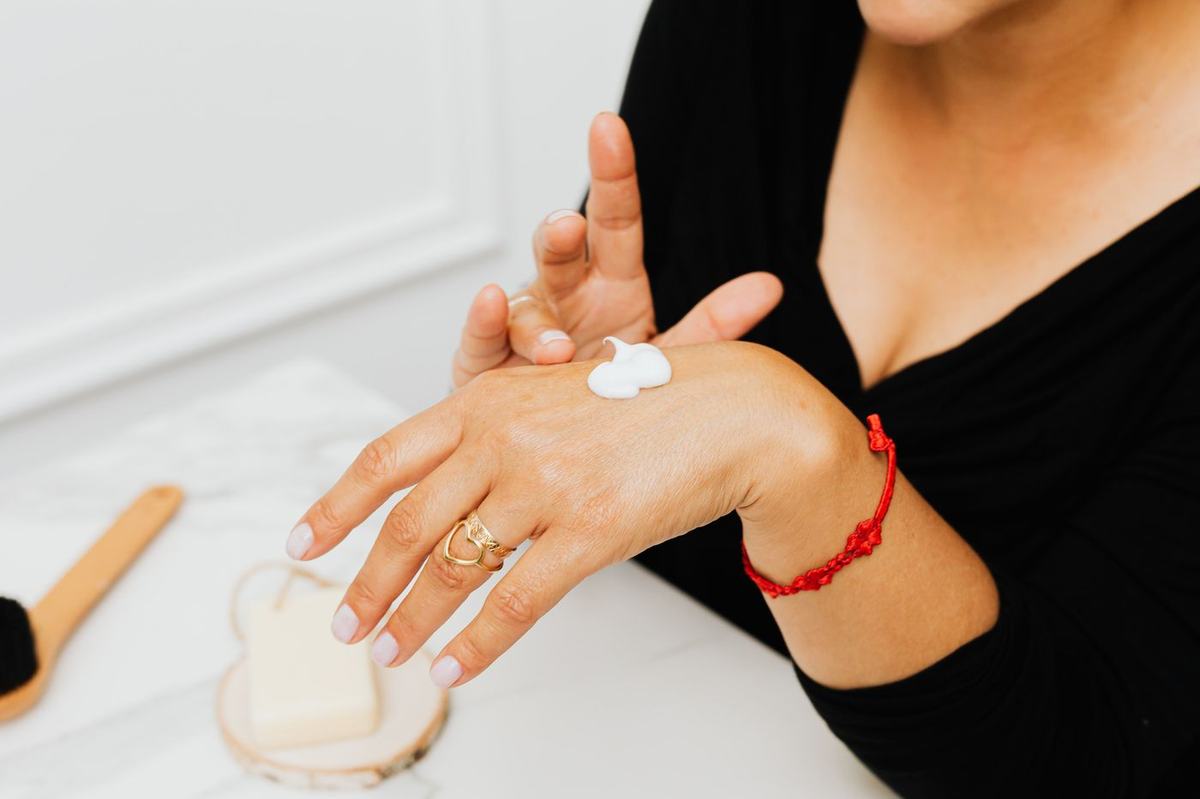
Creams and ointments containing corticosteroids, vitamin D analogues or both remain the first line for limited disease. Scalp preparations, and coal tar or salicylic acid to lift scale, are used where appropriate.
Phototherapy
Narrowband UVB is delivered on site by our nursing team under physician order, typically two to three times a week over a course of several weeks. It is well suited to widespread plaque or guttate psoriasis and is covered by OHIP for recognised diagnoses. Read about how a course of phototherapy works.
Systemic and biologic therapy
For moderate to severe disease, or where joints are involved, oral systemic medicines and injectable biologic therapies that target specific parts of the immune response are considered. Baseline blood tests and periodic monitoring are part of this care. The choice of agent depends on your health history, other conditions and drug coverage, and is made with you. Details on systemic and biologic therapy.
Living with psoriasis
Regular moisturising, avoiding skin injury where possible, limiting alcohol, not smoking and managing weight all help. Stress and certain medications can trigger flares. Your dermatologist will discuss what applies to you.
Research at DermCare
Physicians at this practice have contributed to published research on biologic therapy in psoriasis. See publications.
For referring physicians
Please include the extent of disease, prior treatments and response, any joint symptoms and current medications. Patients who have failed adequate topical therapy, or with more than a limited body surface area involved, are appropriate for referral. How to refer.