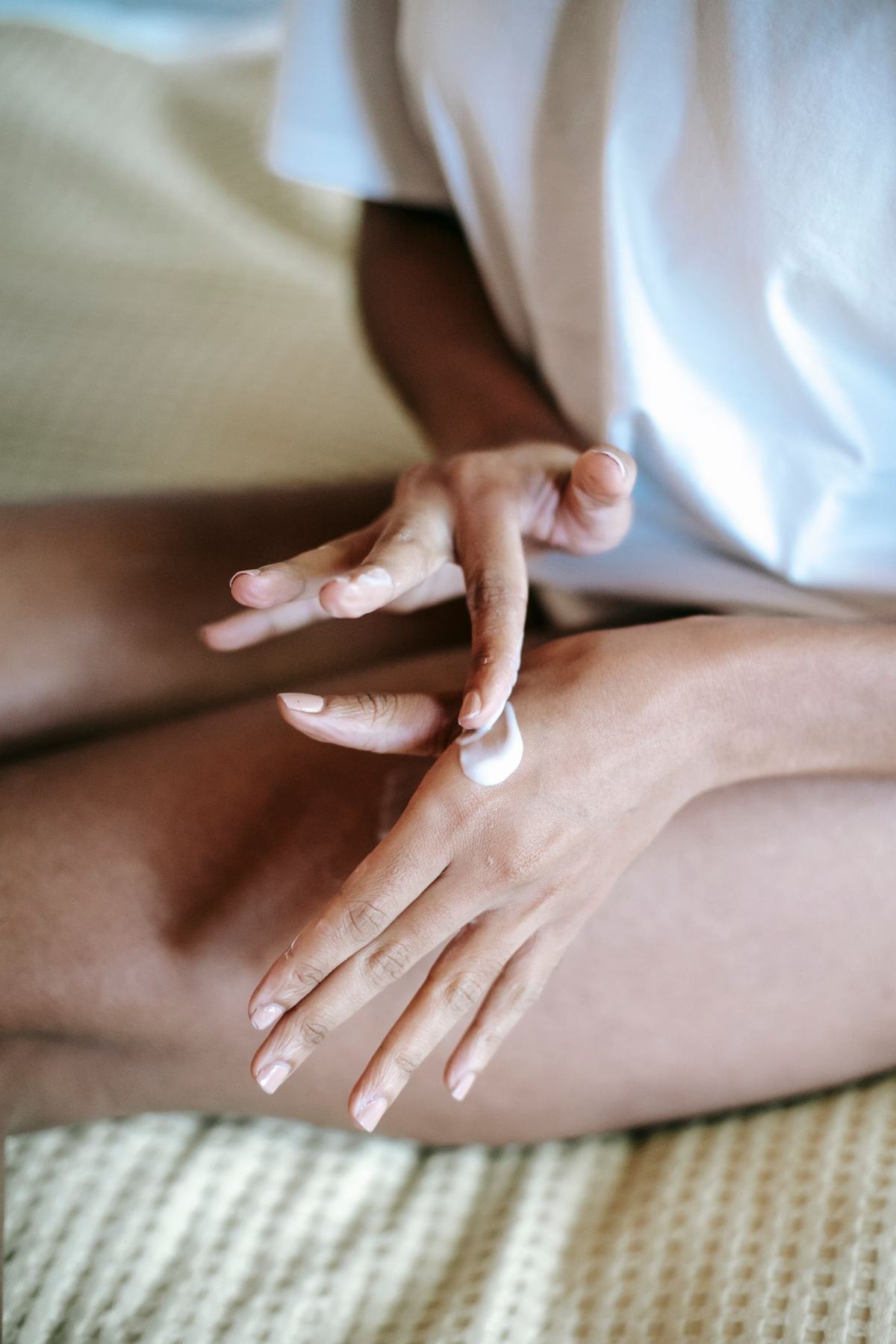
What vitiligo is
Pigment in the skin is made by cells called melanocytes. In vitiligo the immune system attacks these cells, and the affected skin loses its colour. The patches are usually well defined, milky white and symmetrical, commonly on the face, hands, wrists, elbows, knees, around body openings and in skin folds, though any area can be involved. Hair growing in a patch may also turn white. Vitiligo can begin at any age, and about half of people notice it before the age of 20.
The course is unpredictable. Patches may stay stable for years, spread slowly, or spread quickly during periods of activity. Sunburn, friction and skin injury can trigger new patches in some people.
Autoimmune associations
Vitiligo is an autoimmune condition and is more common in people who have, or whose family members have, other autoimmune conditions. The strongest link is with thyroid disease. Your dermatologist may arrange blood tests for thyroid function and, depending on symptoms, other autoimmune conditions, and may recommend periodic checks.
Assessment at DermCare
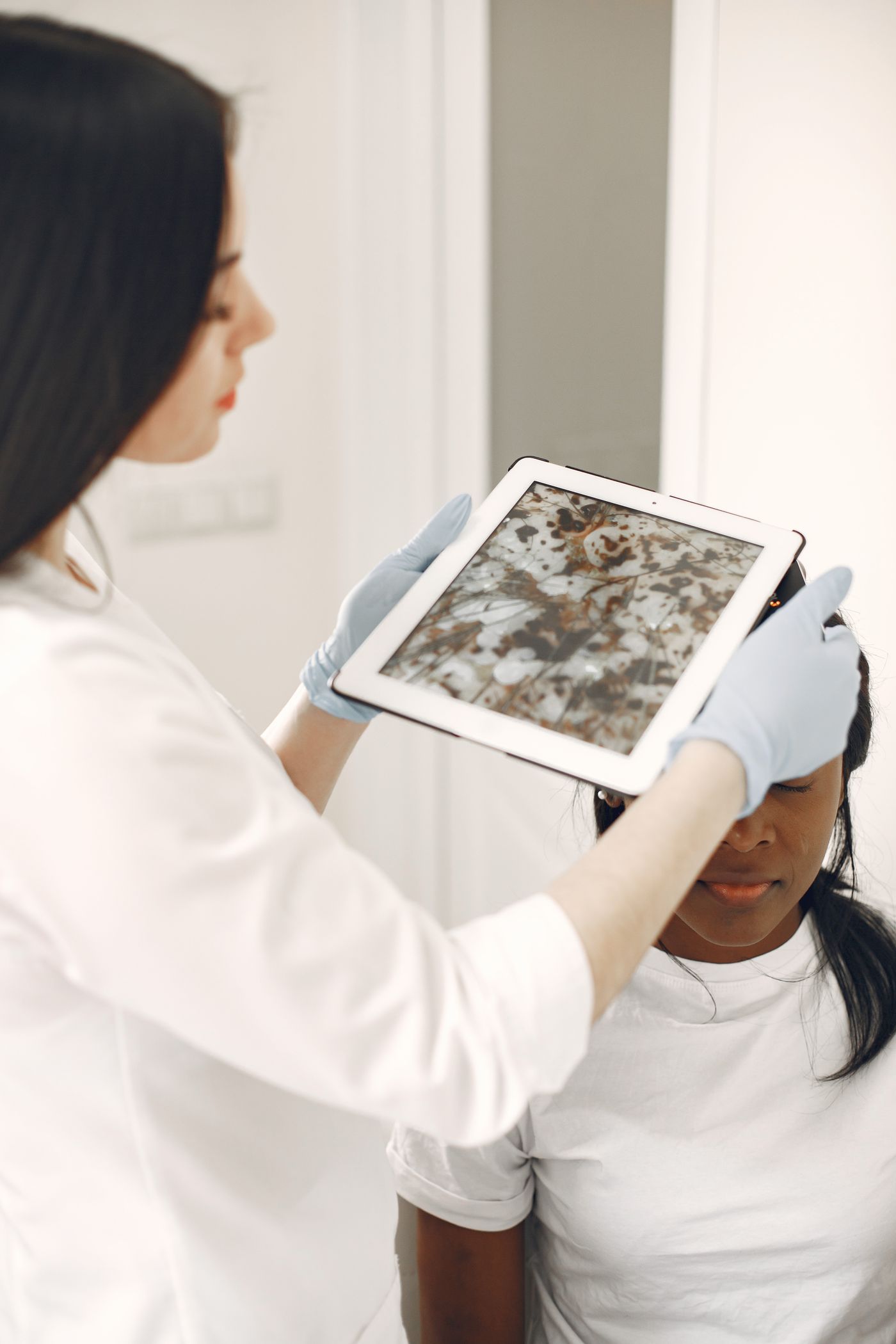
The diagnosis is usually made on examination. A hand held ultraviolet lamp, called a Wood's lamp, makes the patches stand out and helps map the extent, particularly in lighter skin. Your dermatologist records the type of vitiligo, the areas involved and whether it is currently active, which guides treatment choice. A biopsy is rarely necessary.
Treatment options
Treatment aims to stop new patches forming and to bring pigment back into existing patches. Not every patch responds, and results take months, so the plan and expectations are agreed together at the outset.
Topical therapy
Topical corticosteroids and topical calcineurin inhibitors are used for limited areas, with calcineurin inhibitors preferred on the face and folds where they can be used for long periods safely. A topical inhibitor of the immune signalling involved in vitiligo is now approved in Canada for non segmental vitiligo and is considered where appropriate. Topical treatment is often combined with phototherapy.
Narrowband UVB phototherapy
Narrowband UVB is delivered on site by our nursing team under physician order. It is a main treatment for vitiligo that involves more than a small area or is spreading. Treatment is usually two to three times a week. Early signs of repigmentation, often as small freckle like dots around hair follicles, appear after a few months, and a full course commonly continues for a year or longer while pigment is returning. The face and neck tend to respond well; the hands, feet and areas of white hair respond poorly. Read about how a course of phototherapy works.
Other options
Short courses of oral treatment are sometimes used to halt rapidly spreading vitiligo. Surgical grafting techniques exist for stable patches that have not responded to medical treatment and are available at some specialised centres; your dermatologist can advise whether onward referral is appropriate.
Camouflage and sun protection
Cosmetic camouflage products and self tanning lotions can cover patches effectively and are a reasonable choice at any stage, including alongside treatment. Because pigment protects against sunburn, vitiligo patches burn easily and need a high SPF sunscreen. Protecting the surrounding skin from tanning also makes the contrast less visible.
Impact and support
Living with a visible skin difference can affect mood, self image and social life, and this is a legitimate part of the medical conversation. Tell your dermatologist how vitiligo is affecting you. Support organisations for people with vitiligo exist in Canada and internationally, and your dermatologist can point you to them.
For referring physicians
Please note the areas involved, approximate extent, duration, whether it is spreading, any topical treatment tried, and any personal or family history of thyroid or other autoimmune disease. Patients with vitiligo that is spreading, involves the face or hands, or covers more than a limited area are appropriate for phototherapy assessment. How to refer.